
While Christmas is the most important holiday in the US, New Year’s Day is the biggest holiday in Japan. For the New Year’s holiday, we have special foods, decolations, and customs which are traditional and sometimes based on religion. Please enjoy learning the difference and the pictures in this article!
[Special foods]
- Toshikoshi Soba -noodles for New Year’s Eve
Soba noodles are Japanese traditional noodles made from buckwheat flour. Soba noodles are eaten with soy sauce and Japanese soup stock-based dipping sauce. We have these noodles in daily life but those for New Year’s Eve have a special meaning. The long and thin shape of the noodle is likened to a long stable life. People eat soba noodles hoping for peace and health for the coming new year.

- Ozoni -special soup for New Year’s Day
Ozoni is the name of a traditional soup for the new year in which ingredients and tastes are very differ from area to area, families to families. Since my family is from the Kanto area which is the eastern part of Japan, our recipe is based on Kanto style. The soup is clear and soy sauce-based. We use dried bonito, very thin flakes of dried fish as broth. For ingredients, we usually put chicken cut into tiny pieces, spinach, ofu (traditional high-protein food made from wheat gluten), and rectangle-shaped mochi (rice cake).

- Osechiryori -special feast for New Year’s Day
Osechiryori is the name of a traditional new year’s feast. There are many different kinds of foods and they are packed into a couple of fancy boxes. Each food has good meanings wishing for new year’s fortune. I picked some of them to introduce what they are like and the meanings of them.
-kurikinton (mashed sweet potatoes with sweetened chestnuts)
The meaning of this food is being rich based on the golden color. Its smooth texture and natural sweetness are so tasty.
-datemaki (rolled sweet omelet)
People eat datemaki wishing for knowledge based on the shape which looks like a screen, and eggs means getting many children. The bright yellow symbolizes a stylish and fancy life.
-kazunoko (salted herring roe)
The fish eggs are the symbol of many children and the prosperity of a family.

[Decolations]
- Kagamimochi
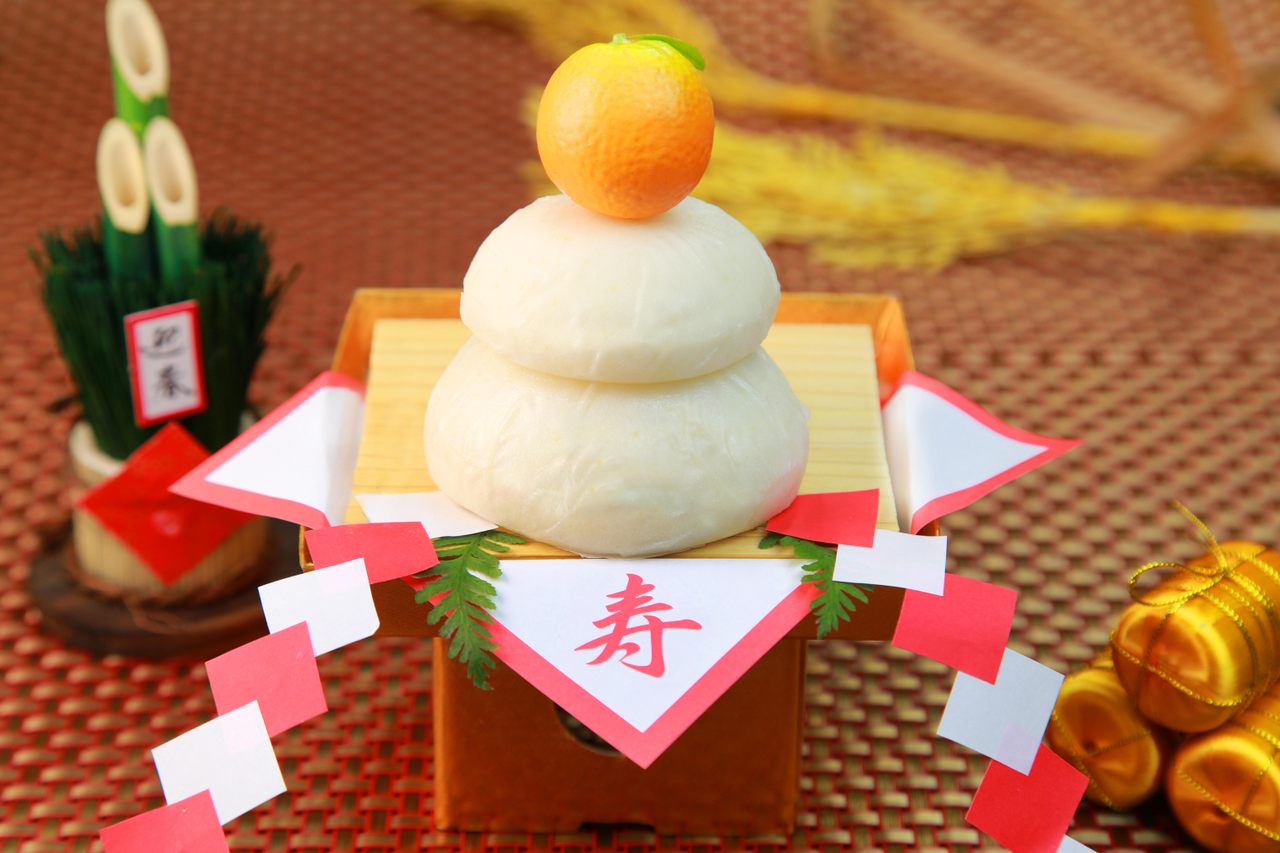
Kagamimochi is two stacked round mochi (rice cakes). A tiny orange is put on the top of it. It is originary offering for the god of a new year and people display it to welcome him. Two round rice cakes symbolize the sun and the moon, and they mean gaining ages and good fortunes. The color of tiny orange on the rice cake means the prosperity of the family relying on the pronunciation of orange in Japanese is the same as the word which means “from generation to generation”. pic
- Shimenawa
Shimenawa is left-twisted rice straw ropes to mark the boundary between the worlds of humans and gods. Huge shimenawa are hung on roofs of shrines in order to send bad splits away. For ordinary houses, people hang small ones on their doors to welcome the god of the new year.

- Kadomatsu
Kadomatsu is a mark for new year’s god not to get lost made by bamboo, pine branches, and Japanese apricot blossoms. These three plants are symbols of good luck because of their patience and strength in cold winter weather. People display kadomatsu by gates of their houses and buildings like stores, hospitals, offices, and city offices to show where they live and work and welcome the god.