Kimono means Japanese traditional clothes. There are so many different kinds of kimonos, and people wear them occasionally. In this article, I’m introducing some of them and explaining the differences.
[Furisode and Tomesode, formal female clothes]
Furisode is a formal type of kimono for unmarried women. The sleeve is very long and the colors and patterns of the fabrics tend to be bright and gorgeous. On Coming of Age Day on the second Monday in January, 20-year-old women wear furisode to celebrate becoming an adult. So it is a typical picture of the special day that we can find young ladies dressed up with furisode in public places.

Tomesode is basically for married women but unmarried women are also allowed to wear depending on the type of tomesode. Compared to furisode, the sleeve is shorter. There are two types of tomesode, kuro-tomesode and iro–tomesode. Kuro-tomesode is the most formal clothing for married ladies. The base color is only black and colored patterns are allowed only on the bottom part. Iro-tomesode can be worn by any woman and there are so many colors of fabrics.

In a formal situation like a wedding, married women who have the most direct and closest relations to the bride and groom like their mothers and grandmothers wear kuro-tomesode. Married women whose relations with the couple are not as close as them like siblings and cousins, or those who are not directly related to the couple like their friends wear iro-tomesode. Unmarried women who are over late twenties or thirties can also choose iro-tomesode.
[Haori-hakama, formal male clothes]
Haori-hakama is a set of male formal outfit. They wear kimono and put hakama, wide pleated trousers over it. Haori is a loose-fitting jacket. There are two types of haori-hakama, kuro-itsumontsuki-haori-hakama and iro-montsuki-haori-hakama. The first type is the most formal, and its base color is black. The ratter one is less formal, and it can be another color but normally quieter and darker than female clothes. On both types, the family emblem is printed on both shoulders of haori.
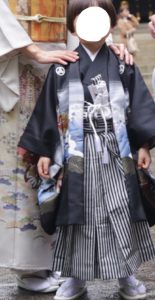
Hakama used to be just for men. However, since it became common among female students to go to school in 1870s, it started to be worn by women as well. These days, hakama is a very popular outfit for graduation.

[Yukata, informal clothes]
Yukata is an informal type of kimono for summer. It looks similar to tomesode, but its fabric is lighter and it’s easier to wear. It’s worn for casual occasions, as an outfit for summer festivals or as lounge wear at a Japanese style hotel. There are both male and female yukata, and there are some differences between them. For example, the belt(called obi) of a female one is wider, and its color is usually brighter than male one.

middle: traditional clothes of South Korea
right: male yukata
[Jinbei]
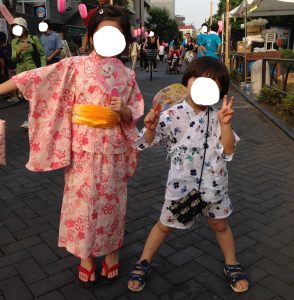
Jinbei is probably the coziest Japanese traditional clothes. The set of the loose-fitting top without belt and short pants is designed for hot and very humid(more humid than Kansas) summer in Japan. It’s basically for men and children, but it’s getting popular among women also. People wear jinbei for casual occasion as same as yukata.